March 20, 2026

 Written by Hasan Munir

Are hidden electrical faults hiding in your home or business, ready to cause trouble? A detailed wiring inspection report can reveal these hidden dangers.
In homes, offices, and factories, the value of an electrical safety test report is huge. It’s a key document that shows if your electrical system is safe.
According to The Express Tribune, 54% of fire cases in Lahore were caused by short circuits, and in Punjab, 79 people died in fire accidents in 2020 with 7,348 emergencies triggered by faulty wiring. In Karachi, over 80% of buildings lack basic fire safety systems, with faulty wiring causing nearly 80% of fires (The News), highlighting the critical importance of electrical wiring test reports.
These reports find problems early, keeping everyone safe. They are a must-have for anyone who owns or manages a property.
Electrical wiring test reports are key documents that show if electrical systems are safe and working right, including electrical wiring underground. They come from detailed checks and tests on electrical wiring. These tests look for any problems or dangers.
An electrical wiring test report is a detailed document. It shows what was found during electrical inspections and tests. It talks about the wiring’s condition, any problems or damage, and what needs to be fixed or improved.
This report is very important. It makes sure electrical setups are safe and meet all the rules and standards.
Documentation is very important for electrical safety. It keeps a record of electrical systems’ condition over time. It helps track maintenance, find recurring problems, and plan for future work.
It also proves that electrical systems follow safety rules and standards. This is important for legal and insurance reasons.
A detailed electrical wiring test report should have a few main parts. These are:
| Component | Description | Importance |
| Installation Details | Includes information about the electrical installation being tested | Essential for understanding the context of the test |
| Test Results | Presents the findings of the inspections and tests conducted | Critical for identifying potential electrical hazards |
| Defects and Damage | Lists any defects or damage identified during the test | Helps in prioritizing repairs and maintenance |
Knowing about electrical wiring test reports helps ensure electrical installations are safe and reliable.
Hidden electrical faults, such as incorrect connections or mismatched electrical wiring color code, can be dangerous. But, testing can find these problems early. This makes sure our electrical systems are safe and work well.
One big worry is insulation getting worn out. This can cause resistance problems. Insulation can break down because of the environment, age, or damage.
When insulation wears out, it’s a big problem. It can lead to electrical shock and fires. Testing for insulation resistance finds these issues early.
Signs of insulation wear include:
Grounding and earthing are key for safety. Faults in these systems can cause shock, damage, and fires.
Common grounding issues include:
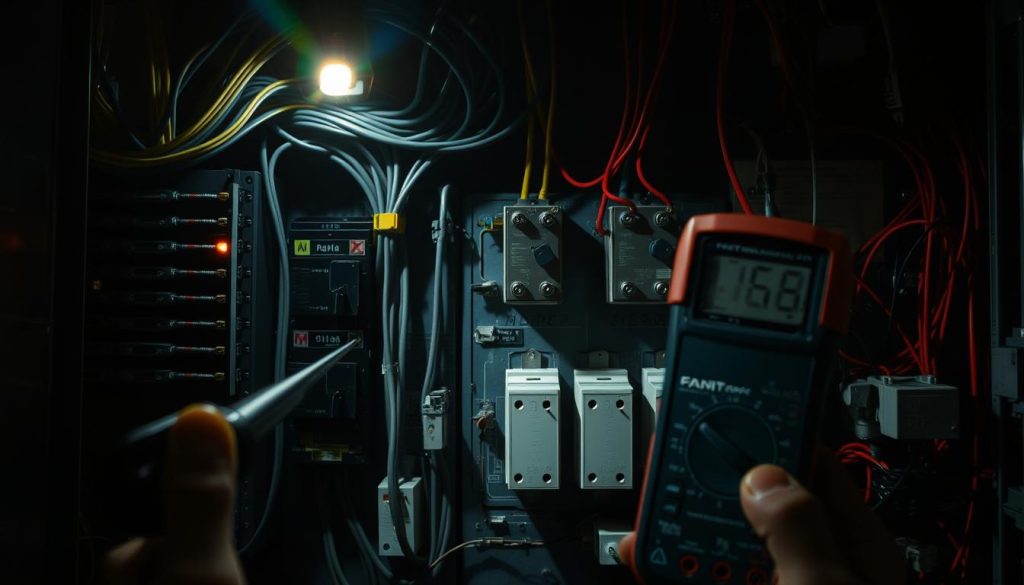
Overloading circuits can cause overheating, fires, and damage. Testing finds circuits that are too full.
| Risk Factor | Description | Potential Consequence |
| Overloaded Circuits | Circuits operating beyond capacity | Overheating, fires |
| Inadequate Circuit Design | Circuits not designed for load | Equipment damage, safety hazards |
Voltage drop can cause equipment problems, lower efficiency, and higher energy costs. Testing finds these issues.
Experts say, “Voltage drop is a big problem. It can hurt the performance and safety of electrical systems.”
“Voltage drop is often overlooked until it causes significant problems. Regular testing can help mitigate these risks.”
— Electrical Safety Expert
Bad connections and terminations can cause overheating, shock, and fires. Testing spots loose or corroded connections.
Best practices for connections include:
Conducting an electrical wiring test report is a detailed process. It ensures the safety and integrity of electrical systems. It helps find electrical faults and suggests fixes.
Before starting, it’s key to prepare for the test. This means looking over the electrical system’s documents. It also involves setting the test’s scope and making sure all needed tools are ready and working.
The first step is a visual inspection. This checks the wiring and parts for damage or wear. It looks for signs like overheating, corrosion, or physical harm.
Instrument testing is a big part of the test. It uses different methods, including:
Good documentation is key for the report. It should list the tests done, the results, and any needed repairs. Following reporting standards makes the report clear and useful.
Understanding test results is important. For example, insulation tests should show values within certain limits. This means the insulation is okay. Knowing these values helps spot faults and keeps the system safe.
Ensuring electrical wiring in Pakistan meets standards is crucial, especially in cities like Karachi. Several entities and guidelines must be followed by property owners and electrical experts.
The Pakistan Engineering Council (PEC) oversees engineering practices, including electrical work. It ensures electrical wiring test reports are done by certified professionals. A PEC-compliant wiring test report proves the safety and quality of electrical setups.
Karachi’s electrical rules are set by K-Electric. Property owners must follow these to keep their electrical systems safe and up to standard. This includes regular checks and getting the right certifications.
Finding skilled electrical inspectors is key for accurate wiring test reports. Look for those registered with the PEC and familiar with K-Electric’s rules.
The price of wiring test reports varies. It depends on the property size, electrical system complexity, and the inspector’s skills. Costs usually fall between PKR 10,000 and PKR 50,000.
Testing frequency changes based on property type. Homes need testing every 5-10 years, while businesses should check every 1-3 years.
| Property Type | Recommended Testing Frequency |
| Residential | Every 5-10 years |
| Commercial | Every 1-3 years |
| Industrial | Every 6-12 months |
Electrical wiring test reports are key in finding hidden faults. They help ensure that electrical work meets Pakistan’s standards. By doing thorough checks and tests, owners can avoid electrical dangers and keep their places safe.
These reports show problems like bad insulation, grounding issues, and overload risks. Inspectors follow a set procedure to give detailed reports. This helps owners fix electrical safety issues.
In Pakistan, following electrical rules is very important. The Pakistan Engineering Council (PEC) makes rules for electrical checks. Owners must follow these to stay safe and avoid fines.
Putting electrical safety first and getting regular tests done is smart. It helps protect property and keeps the electrical system working well.
Partner with certified PowerLinkCo today to secure your property. Call us now at +92 323 2011998 or email us at Powerlink311@gmail.com to schedule your comprehensive wiring inspection.
An electrical wiring test report aims to find electrical dangers. It makes sure everything meets safety rules. This is important for homes, businesses, and factories.
A detailed report covers several tests. These include checking insulation, earth continuity, and voltage. It also notes any problems found.
Testing frequency changes with property type. Homes need it every 10 years. But, businesses and factories might need it more often, like every 1-5 years.
In Pakistan, reports must follow the Pakistan Engineering Council (PEC) rules. This is especially true for Karachi, to meet local electrical standards.
Look for certified inspectors by the Pakistan Engineering Council (PEC). Or check local electrical contractors associations. This ensures they know the rules and have the right skills.
Insulation resistance testing, or the Megger test, is key. It spots insulation wear and electrical faults. This helps avoid dangers and keeps the system safe.
Results are checked against safety standards. This helps find any issues that need fixing.
Costs vary based on property size, inspector’s skills, and needed services. Prices can be from a few thousand to tens of thousands of rupees.
